

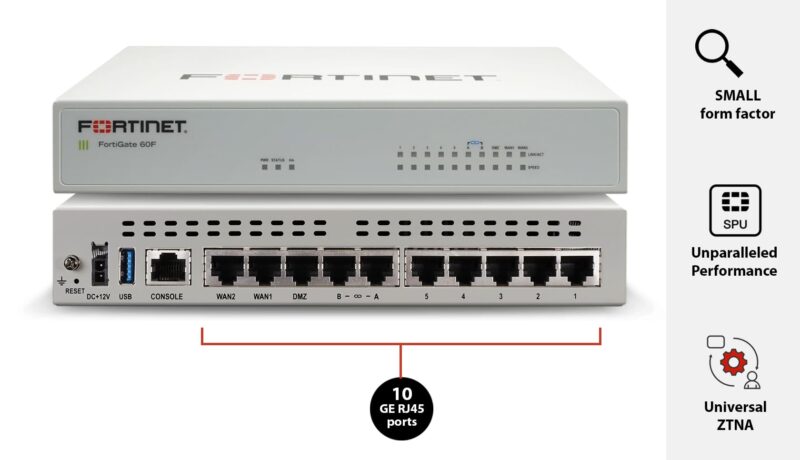

Managing a sprawling network infrastructure is a complex challenge that keeps many IT directors awake at night. As organisations expand their digital footprint across hybrid clouds, branch offices, and remote workstations, maintaining a consistent security posture becomes increasingly difficult. This is where the fortimanager appliance proves to be an indispensable tool. It acts as a centralised management solution, allowing network administrators to command their entire Fortinet Security Fabric from a single console, significantly reducing the complexity involved in securing modern enterprise networks.
Table Of Content
- The Role of Centralised Network Management
- Key Features and Benefits
- Centralised Management
- Automation and Orchestration
- Scalability and Flexibility
- Reporting and Analytics
- Strategic Use Cases
- Simplifying Security Operations
- Enhancing Compliance
- Improving Network Visibility
- Securing the Future of the Network
Without a unified management system, security teams are often forced to configure devices individually. This fragmented approach is not only time-consuming but also prone to human error—the leading cause of security breaches. By consolidating control, organisations can ensure that policies are applied consistently, threats are identified rapidly, and the network operates efficiently.
The Role of Centralised Network Management
The primary function of network management in a modern context is to bring order to chaos. As networks grow, the number of firewalls, switches, and access points increases, often leading to ‘tool sprawl’. This phenomenon occurs when teams use too many disparate tools to manage different parts of the network, creating silos of information and visible gaps in security.
FortiManager addresses this by serving as the central nervous system for the Fortinet Security Fabric. It provides a unified management interface for FortiGate Next-Generation Firewalls (NGFWs), FortiSwitch, FortiAP, and other Fortinet solutions. This consolidation allows for the streamlined deployment of security policies and firmware updates, ensuring that every device on the network is up-to-date and configured correctly according to corporate standards.
Key Features and Benefits
To understand why this tool is a staple in many enterprise environments, we must look at the specific features that drive its value. It is not merely a dashboard; it is a sophisticated orchestration engine designed to handle the rigours of enterprise networking.
Centralised Management
The ‘single pane of glass’ concept is frequently discussed in IT circles, but few tools deliver it effectively. FortiManager allows administrators to view and manage thousands of devices through one interface. Instead of logging into individual firewalls to update a web filtering profile or block a suspicious IP address, an admin can push a global policy change to all relevant devices in minutes.
This centralised approach extends to device configuration and firmware management. You can schedule firmware upgrades for hundreds of devices during off-peak hours, minimising downtime and ensuring that critical security patches are applied without manual intervention at each site.
Automation and Orchestration
Manual tasks are the enemy of efficiency. The platform includes powerful automation capabilities that reduce the burden on IT staff. Through the use of scripts and templates, repetitive tasks such as device provisioning can be fully automated.
For instance, zero-touch provisioning allows branch offices to plug in a new FortiGate device, have it automatically connect to FortiManager, and pull down its specific configuration without a network engineer ever needing to visit the site. This level of orchestration is vital for businesses with a distributed footprint, such as retail chains or logistics companies, where speed of deployment is a competitive advantage.
Scalability and Flexibility
Whether an organisation manages ten devices or ten thousand, the management platform must be able to cope with the load. FortiManager is designed with scalability at its core. It supports Administrative Domains (ADOMs), which allow the segregation of device management based on geographic location, department, or customer (in the case of Managed Security Service Providers).
This flexibility ensures that as the network grows, the management layer does not become a bottleneck. Large enterprises can delegate administrative rights to local IT teams for their specific ADOMs while maintaining global oversight at the headquarters level.
Reporting and Analytics
You cannot secure what you cannot see. While FortiAnalyzer is often the go-to for deep log analysis, FortiManager provides substantial visibility features on its own. It offers real-time monitoring of network health and device status.
Administrators can generate reports on policy usage, identifying unused rules that can be removed to optimise firewall performance. Furthermore, it provides insight into network traffic patterns, helping teams understand how bandwidth is being consumed and where potential bottlenecks or security risks may lie.
Strategic Use Cases
Implementing a centralised management solution transforms how security operations centres (SOCs) and network operations centres (NOCs) function. Here are the primary use cases where the platform delivers the highest return on investment.
Simplifying Security Operations
Security teams are often overwhelmed by the sheer volume of alerts and the complexity of maintaining diverse security policies. By simplifying operations, the platform allows skilled engineers to focus on threat hunting and strategic initiatives rather than mundane configuration changes.
For example, when a new security threat emerges, the team can create a specific policy to mitigate that threat and push it to the entire network instantly. This rapid response capability is critical in limiting the blast radius of a cyberattack.
Enhancing Compliance
Regulatory compliance is a significant burden for industries such as finance, healthcare, and government. Standards like GDPR, PCI DSS, and HIPAA require rigorous controls over data access and network security.
FortiManager assists in maintaining compliance by ensuring that security policies are consistent and tamper-proof. It tracks every change made to the configuration, providing a comprehensive audit trail. If an auditor asks who changed a firewall rule and when, the answer is readily available. This capability simplifies the audit process and helps organisations demonstrate due diligence in their security practices.
Improving Network Visibility
A lack of visibility is a security risk in itself. If a branch office firewall goes offline or a switch port starts broadcasting errors, central IT needs to know immediately. The platform provides a topological view of the network, showing the status of the security fabric in real-time.
This enhanced visibility extends to SD-WAN environments. Administrators can monitor the performance of WAN links, ensuring that critical business applications are routed over the best available path. If latency spikes on a primary link, the system can provide the insights needed to troubleshoot the issue before it impacts end-user productivity.
Securing the Future of the Network
The complexity of enterprise networks is unlikely to decrease. As businesses continue to adopt cloud services and IoT devices, the attack surface will only expand. Tools like FortiManager are no longer a luxury; they are a necessity for maintaining a robust security posture.
By centralising management, automating routine tasks, and providing deep visibility into network operations, it empowers organisations to move faster and more securely. It shifts the focus from managing individual boxes to managing security as a holistic ecosystem. For any enterprise serious about protecting its digital assets while maintaining operational agility, streamlining network management is the logical next step.


No Comment! Be the first one.