

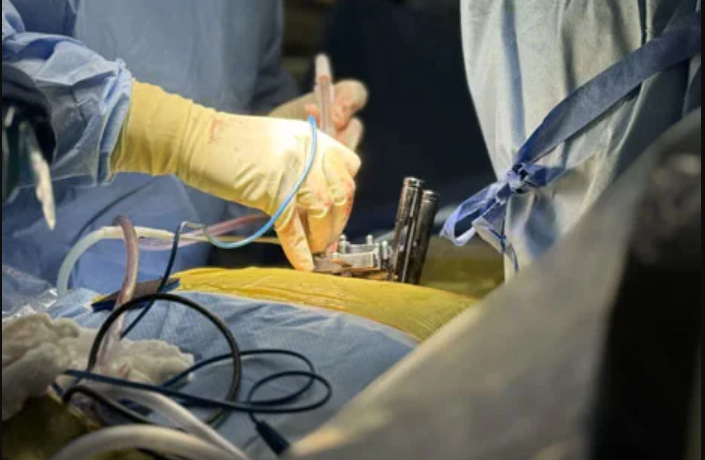
Advanced Minimally Invasive Spine Surgery: Inside the Operating Room of a Renowned Specialist

Introduction – Why Minimally Invasive Spine Surgery Matters More Than Ever
Spinal disorders remain one of the leading causes of disability worldwide. Herniated discs can sideline athletes. Degenerative stenosis can make daily movement painful. Because the spine supports every motion, even small problems can disrupt life in major ways.
Table Of Content
- Introduction – Why Minimally Invasive Spine Surgery Matters More Than Ever
- The Technology Behind Advanced Minimally Invasive Spine Surgery
- High-Resolution 3-D Navigation
- Robotics in Spine Surgery
- Endoscopic Spine Surgery
- Augmented Reality in Spine Surgery
- What Conditions Can Advanced MIS Treat?
- What a Typical MIS Surgery Looks Like
- Preoperative Planning
- During Surgery
- Immediate Recovery
- Recovery Timeline
- What Does the Research Say?
- Common Misconceptions About Minimally Invasive Spine Surgery
- The Future of Advanced Minimally Invasive Spine Surgery
- Key Takeaways
- Final Thoughts
In the past, surgeons relied on open spine surgery. These procedures required large incisions and significant muscle dissection. Although outcomes were often successful, recovery was long and painful. Patients frequently experienced blood loss, infection risk, and months of rehabilitation.
Today, however, advanced minimally invasive spine surgery (MIS) has changed that reality.
With high-definition imaging, robotic guidance, and ultra-thin endoscopic tools, surgeons can now treat complex spinal conditions through incisions as small as a pencil eraser. As a result, patients recover faster, experience fewer complications, and return to normal life much sooner.
In this article, you will learn:
-
How advanced minimally invasive spine surgery evolved
-
What technologies power modern MIS
-
Which spinal conditions it treats
-
What recovery actually looks like
-
What current research shows
The Technology Behind Advanced Minimally Invasive Spine Surgery
High-Resolution 3-D Navigation
Precision drives success in minimally invasive spine surgery.
Traditional fluoroscopy produces flat, two-dimensional X-ray images. Surgeons must mentally reconstruct the anatomy. This process increases the risk of error, especially in complex regions.
Now, intraoperative CT-based navigation creates a 3-D map of the spine. Many surgeons refer to this as a “spine GPS.” It guides pedicle screw placement and implant positioning with millimeter-level accuracy.
Studies show navigation reduces pedicle screw malposition rates from 10–15% to below 2%. Consequently, the risk of nerve injury drops significantly.
Robotics in Spine Surgery
Robotics adds another layer of precision and consistency.
Before surgery, the surgeon plans screw trajectories using CT imaging. During the procedure, the robotic arm aligns perfectly with that plan. The surgeon inserts instruments through a guided sleeve while the system compensates for patient movement.
Robotics provides three major advantages:
-
Consistency – Every screw follows the planned path.
-
Speed – Multi-level fixation procedures take less time.
-
Safety – Software alerts prevent cortical breaches.
Because of this technology, procedures that once required four hours may now finish in under two.
Endoscopic Spine Surgery
Endoscopic minimally invasive spine surgery uses a small fiber-optic camera, typically 4 mm wide. The surgeon inserts it through a narrow working channel.
Since the camera sits directly next to the pathology, the surgeon sees magnified and highly detailed images of the disc, nerves, and surrounding tissue.
Additionally, newer bi-portal systems allow two-handed techniques while preserving muscle integrity. Therefore, surgeons gain flexibility without increasing tissue damage.
Augmented Reality in Spine Surgery
Augmented reality (AR) represents the next frontier.
AR headsets project a 3-D model of the patient’s spine directly into the surgeon’s field of vision. This overlay shows nerve roots, the spinal cord, and planned implant positions.
Although still emerging, early trials show AR can reduce operative time in complex cervical fusions by up to 30%.
What Conditions Can Advanced MIS Treat?
Many patients believe minimally invasive spine surgery only treats simple disc herniations. In reality, its scope has expanded significantly.
Today, surgeons use advanced minimally invasive spine surgery to treat:
-
Lumbar disc herniations
-
Degenerative spondylolisthesis
-
Lumbar and thoracic spinal stenosis
-
Cervical radiculopathy
-
Spinal tumors
-
Multi-level deformities
Importantly, MIS does not simply shrink the incision. Instead, it restructures the entire surgical approach to preserve muscles, ligaments, and surrounding tissue.
As a result, patients experience:
-
Less blood loss
-
Reduced postoperative pain
-
Shorter hospital stays
-
Faster return to work
What a Typical MIS Surgery Looks Like
Preoperative Planning
Careful planning ensures optimal outcomes.
Two weeks before surgery, imaging studies such as CT scans and MRIs map the patient’s anatomy. Surgeons then upload this data into robotic planning software. This digital blueprint guides every step of the procedure.
During Surgery
The procedure typically follows these steps:
-
Small 1-cm skin incisions
-
Robotic-guided pedicle screw placement
-
Endoscopic disc removal
-
Interbody cage placement
-
Percutaneous fixation
-
Minimal closure with no drains
Most procedures finish in under two hours. Many patients return home the same day.
Immediate Recovery
Recovery begins quickly.
Within hours, most patients sit upright and walk with assistance. Pain scores remain significantly lower compared to open surgery. In many cases, narcotic use remains minimal.
Recovery Timeline
-
Week 1: Mild incision discomfort, walking independently
-
Week 2: Light office work resumes
-
Week 6: Return to regular daily activity
-
Week 12: Radiographic fusion visible, major functional improvement
Because advanced minimally invasive spine surgery protects muscle tissue, patients regain mobility faster.
What Does the Research Say?
Clinical data strongly supports MIS.
Recent meta-analyses comparing MIS TLIF with open surgery show:
-
45% less blood loss
-
Shorter hospital stays
-
Lower infection rates
-
Comparable fusion success rates
Additionally, robot-assisted pedicle screw placement demonstrates significantly lower breach rates compared to traditional freehand techniques.
Importantly, patient-reported outcome scores improve at the same level as open surgery—but in half the recovery time.
Common Misconceptions About Minimally Invasive Spine Surgery
Myth: MIS is just a smaller open surgery.
Reality: MIS uses a completely different muscle-preserving approach.
Myth: Only simple cases qualify.
Reality: With robotics and navigation, surgeons treat complex deformities minimally invasively.
Myth: It is too expensive.
Reality: Although technology costs more upfront, shorter hospital stays and fewer complications reduce overall healthcare expenses.
Myth: Faster recovery increases re-injury risk.
Reality: Structured rehabilitation protocols protect the surgical construct.
The Future of Advanced Minimally Invasive Spine Surgery
Innovation continues to accelerate.
Upcoming advancements include:
-
AI-driven surgical planning
-
Fully integrated AR and robotic systems
-
Bioactive implants that promote faster fusion
-
Remote surgical mentoring via high-speed connectivity
As these technologies mature, spine surgery will become even safer, faster, and more personalized.
Key Takeaways
-
Advanced minimally invasive spine surgery offers outcomes comparable to open surgery with less pain and faster recovery.
-
Technology improves precision, but surgeon expertise remains essential.
-
Patient participation in recovery plays a crucial role.
-
Future innovations will further enhance safety and results.
Final Thoughts
Minimally invasive spine surgery has transformed modern spinal care. What once required large incisions and long hospital stays now often involves same-day discharge and rapid rehabilitation.
For patients struggling with chronic back or neck pain that does not respond to conservative treatment, advanced minimally invasive spine surgery provides a safer and faster path to relief.
The future of spine surgery is not only effective. It is remarkably gentle.

22 Comments
Leave a Reply
You must be logged in to post a comment.


Useful information. Lucky me I discovered your website accidentally, and I’m stunned why this coincidence did not took place earlier!
I bookmarked it.
Keep this going please, great job!
I visited multiple sites except the audio feature for audio songs present at this web page is actually excellent.
Aw, this was an exceptionally nice post. Taking the time and actual effort to generate a very good
article… but what can I say… I hesitate
a lot and don’t manage to get anything done.
Hello there, You’ve done a fantastic job. I will certainly digg it and personally suggest to my friends.
I’m sure they’ll be benefited from this site.
I’m truly enjoying the design and layout of your website.
It’s a very easy on the eyes which makes it much more
pleasant for me to come here and visit more often. Did you hire out a developer to create your
theme? Outstanding work!
hi!,I really like your writing so so much! share we communicate
more about your article on AOL? I require an expert in this house to resolve my
problem. May be that is you! Having a look ahead to peer
you.
Please let me know if you’re looking for a writer for your weblog.
You have some really good articles and I feel I
would be a good asset. If you ever want to take some
of the load off, I’d absolutely love to write
some content for your blog in exchange for a link back to
mine. Please send me an e-mail if interested. Thank you!
Wow, that’s what I was seeking for, what a information! existing here
at this webpage, thanks admin of this web site.
It appears that you’ve put a fine amount of
effort into your piece and I demand a lot more of these on the World Wide Web these days.
I truly got a kick out of your post. I do not have a bunch to
to say in reply, I only wanted to register to say phenomenal work.
I want to to thank you for this excellent read!! I absolutely enjoyed every little bit of it.
I have got you book-marked to look at new stuff you post…
Also visit my site :: 亞洲A片
I like the helpful info you provide in your articles.
I will bookmark your blog and check again here frequently.
I’m quite sure I’ll learn plenty of new stuff right here!
Best of luck for the next!
Why visitors still make use of to read news papers when in this technological world everything is accessible on net?
Great info. Lucky me I recently found your blog by chance (stumbleupon).
I’ve book marked it for later!
I was able to find good information from your blog
posts.
I really like your blog.. very nice colors & theme.
Did you design this website yourself or did you hire someone to do it
for you? Plz answer back as I’m looking to construct my own blog and would like to find out where u got this
from. many thanks
Hi, just wanted to say, I loved this article. It was practical.
Keep on posting!
I was able to find good information from your blog
articles.
Woah! I’m really enjoying the template/theme of this website.
It’s simple, yet effective. A lot of times it’s difficult to get that “perfect balance” between usability and appearance.
I must say you’ve done a great job with this.
Also, the blog loads super fast for me on Opera. Excellent Blog!
Unquestionably consider that which you stated. Your favourite reason appeared to be on the web the
easiest factor to have in mind of. I say to you,
I certainly get annoyed whilst folks consider worries that they just
don’t recognize about. You managed to hit the nail upon the highest and outlined out the whole
thing without having side-effects , other people can take a
signal. Will likely be back to get more. Thank you
Hi, after reading this awesome piece of writing i
am too glad to share my knowledge here with mates.
Way cool! Some extremely valid points! I appreciate you writing this post and
also the rest of the site is also very good.