

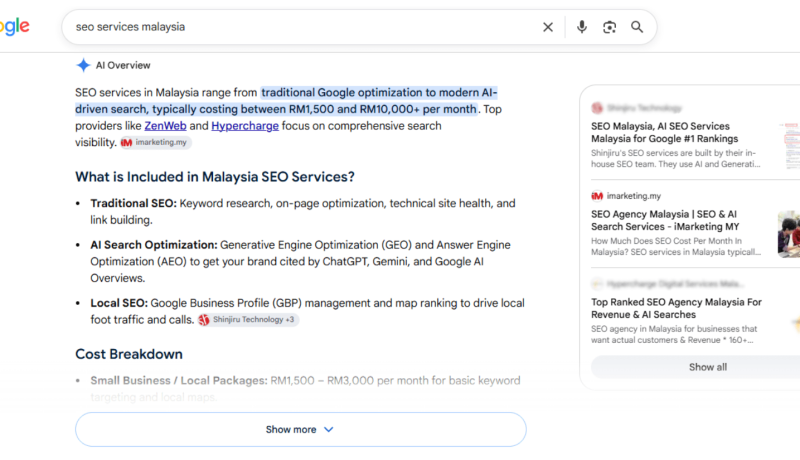

For businesses in Malaysia, establishing a strong online presence is essential for reaching potential customers, generating qualified leads, and staying competitive. Whether you run a small business in Kuala Lumpur, an e-commerce store in Selangor, or a B2B company serving customers nationwide, your website needs to be discoverable when people search for products and services related to your industry.
Table Of Content
- 1. What Is SEO and Why Does Your Business Need It?
- Key Components of SEO
- 2. How SEO Helps Malaysian Businesses Attract More Customers
- Reach Customers With Relevant Search Intent
- Build Long-Term Online Visibility
- Improve Brand Credibility
- Generate Qualified Leads
- 3. Understanding SEO Services for Different Business Types
- SEO for Small and Local Businesses
- SEO for E-Commerce Businesses
- SEO for B2B Companies
- 4. What Is Link Building and Why Does It Matter?
- Benefits of Link Building
- 5. How Link Building Malaysia Campaigns Work
- Step 1: Set Clear Campaign Objectives
- Step 2: Identify Relevant Websites
- Step 3: Create Resources Worth Referencing
- Step 4: Conduct Relevant Outreach
- Step 5: Monitor Results
- 6. How to Choose the Right SEO Optimization Service
- Review Their Research and Planning Process
- Check Their Technical SEO Capabilities
- Evaluate Content Quality
- Understand Link Building Methods
- Look for Transparent Reporting
- 7. SEO Mistakes Business Owners Should Avoid
- Focusing Only on High-Volume Keywords
- Buying Low-Quality Backlinks
- Publishing Thin or Repetitive Content
- Ignoring Technical Problems
- Expecting Immediate Results
- Measuring Only Rankings
- 8. How to Measure SEO and Link Building Results
- Organic Search Visibility
- Website Engagement
- Backlink Quality
- Leads and Conversions
- Return on Investment
- 9. How Much Should Malaysian Businesses Invest in SEO?
- 10. Building a Sustainable SEO Strategy for Your Business
- Conclusion
- Frequently Asked Questions
- What does an SEO agency in Malaysia do?
- What is Link Building Malaysia?
- How long does SEO take to show results?
- How many backlinks does my website need?
- Is link building still important for SEO?
- Can small businesses afford professional SEO services?
- How can I identify a trustworthy SEO provider?
However, simply having a website does not guarantee visibility on Google. Your competitors may already be investing in keyword research, content optimization, technical SEO, and backlink acquisition to improve their search performance. Without a clear strategy, your business may struggle to reach the right audience, even when you offer excellent products or services.
This is where professional SEO and link building become valuable. A reliable seo optimization service can help your business improve website structure, target relevant search queries, and create content that meets customer needs. Meanwhile, a strategic Link Building Malaysia campaign can help your website earn relevant backlinks, increase brand exposure, and strengthen its position within your industry.
In this guide, we explain how SEO and link building work, why Malaysian business owners should consider these services, how to evaluate potential providers, and how to measure whether your investment is delivering meaningful results.
1. What Is SEO and Why Does Your Business Need It?
Search engine optimization, commonly known as SEO, is the process of improving a website’s visibility in unpaid search engine results. It involves making your website easier for search engines to discover and understand while ensuring that its content provides value to visitors.
When potential customers search for a service, they often compare several businesses before deciding whom to contact. Appearing in relevant search results can help your company become part of that consideration process.
For example, a company offering office renovation services may want to reach customers searching for commercial renovation contractors in Kuala Lumpur. An online retailer might focus on product-related searches, while a B2B technology provider may target decision-makers researching software solutions.
An effective SEO strategy helps businesses connect their website content with these searches.
Key Components of SEO
SEO generally involves several interconnected activities:
- Keyword research: Identifying relevant search terms and understanding what users want to find.
- On-page SEO: Improving titles, headings, content, internal links, and other page elements.
- Technical SEO: Addressing crawling, indexing, website structure, and performance issues.
- Content optimization: Improving existing pages and creating useful new resources.
- Link building: Earning relevant backlinks from other websites.
- Performance analysis: Monitoring organic search visibility, traffic, leads, and conversions.
These activities work best when coordinated. For example, creating high-quality content may have limited impact if a page cannot be indexed, while acquiring backlinks to an unhelpful landing page may not deliver meaningful business results.
2. How SEO Helps Malaysian Businesses Attract More Customers
Reach Customers With Relevant Search Intent
SEO allows businesses to reach people who are actively researching a product, service, or solution. Unlike marketing messages that interrupt people during other activities, organic search visibility can connect your business with users who have already expressed an interest through their queries.
However, the value of a keyword depends on more than its search volume.
A phrase such as “what is office renovation” may attract people seeking general information. A search such as “commercial office renovation contractor Kuala Lumpur” may indicate a stronger intention to find a provider.
By understanding search intent, businesses can create pages that match the needs of different audiences.
Build Long-Term Online Visibility
Paid advertising can provide immediate exposure, but continued traffic usually depends on maintaining advertising spend. SEO provides an additional channel through which useful pages can attract visitors over time.
Organic visibility is not free, because businesses still need to invest in content, technical maintenance, and ongoing optimization. Nevertheless, strong website content can continue supporting customer discovery long after publication.
Improve Brand Credibility
Potential customers often evaluate several providers before making a decision. A website that offers detailed service information, practical resources, customer testimonials, and relevant case studies can help build confidence.
Appearing consistently for relevant searches can also improve brand awareness. However, businesses should ensure that their website supports this visibility with accurate information, transparent claims, and a professional user experience.
Generate Qualified Leads
For most business owners, traffic is only one part of the objective. The real goal is to generate inquiries, sales, appointments, or other valuable actions.
An effective SEO strategy connects search visibility with conversion opportunities. This may involve improving service pages, adding clear calls to action, providing useful contact information, and linking educational articles to relevant commercial pages.
The result is a website designed not only to attract visitors but also to help potential customers take the next step.
3. Understanding SEO Services for Different Business Types
Different businesses require different SEO priorities. A strategy that works for a local service provider may not be appropriate for a national e-commerce store.
SEO for Small and Local Businesses
Local businesses often need to reach customers in specific cities, towns, or service areas. Examples include dental clinics, law firms, renovation contractors, restaurants, and professional service providers.
Local SEO activities may include optimizing a Google Business Profile, maintaining accurate contact information, creating useful location-specific content, earning relevant local mentions, and encouraging genuine customer reviews.
Location pages should provide meaningful information about the services available in each area rather than repeating nearly identical content across many URLs.
SEO for E-Commerce Businesses
E-commerce SEO focuses on helping customers discover product categories, individual products, and useful buying information.
Important activities include optimizing category pages, improving product descriptions, managing duplicate or filtered URLs, strengthening internal linking, and ensuring product pages can be crawled and indexed appropriately.
Content such as product comparisons, buying guides, and frequently asked questions can also help shoppers evaluate their options.
SEO for B2B Companies
B2B businesses often have longer sales cycles and multiple decision-makers. Their SEO strategy may prioritize high-intent service keywords, industry-specific landing pages, educational guides, case studies, and detailed explanations of their solutions.
Content should address business challenges, explain the value of the offering, and help prospects evaluate providers.
For these companies, measuring qualified leads and sales opportunities can be more meaningful than focusing solely on total website visits.
4. What Is Link Building and Why Does It Matter?
Link building is the process of earning or acquiring hyperlinks from other websites that point to your website. These links are known as backlinks.
Search engines can use links to discover pages and as signals that help them understand relationships between websites and content. Relevant, editorially earned backlinks may support search visibility, but no individual link guarantees higher rankings.
Quality and context matter. A link from a trusted industry publication that genuinely references your expertise may be more valuable than dozens of links from unrelated websites created primarily to manipulate rankings.
Benefits of Link Building
Strengthens online authority: Relevant backlinks can help establish connections between your business and recognized industry resources.
Supports content discovery: Links can provide pathways for search engine crawlers to discover website pages.
Generates referral traffic: Readers may click through from relevant publications to explore your services or products.
Improves brand awareness: Mentions in industry publications, business resources, and relevant online communities can introduce your company to new audiences.
Supports a broader SEO strategy: Link building can complement technical improvements, useful content, and a strong internal linking structure.
Backlinks should be viewed as one component of SEO rather than a substitute for a well-optimized website.
5. How Link Building Malaysia Campaigns Work
A Malaysia-focused link building campaign aims to earn relevant online references for businesses targeting Malaysian customers or operating in the local market.
Potential opportunities may include legitimate Malaysian business publications, industry associations, specialist websites, relevant directories, professional organizations, and editorial resources.
The best opportunities depend on your industry, audience, and objectives. A technology provider may benefit from relevant technology publications, while a hospitality company may seek coverage from travel-related resources.
A website’s .my domain alone does not make a backlink valuable. Businesses should also assess relevance, editorial quality, audience trust, and the context in which the link appears.
Step 1: Set Clear Campaign Objectives
Before acquiring backlinks, determine what the campaign should achieve.
Possible objectives include:
- Improving the visibility of an important service page.
- Promoting a useful research report or industry guide.
- Increasing referral traffic from relevant publications.
- Strengthening brand recognition in a particular industry.
- Supporting a new product or service launch.
Clear objectives help determine which websites to approach and how to measure results.
Step 2: Identify Relevant Websites
Research websites that publish content related to your industry, target audience, or business expertise.
Evaluate their editorial standards, content quality, topical relevance, audience engagement, and reputation. Be cautious of websites that publish large volumes of unrelated articles or appear to exist primarily to sell backlinks.
Third-party SEO metrics can help organize prospects, but they are estimates rather than direct Google ranking factors.
Step 3: Create Resources Worth Referencing
Publish useful resources that give other websites a genuine reason to mention your business.
These may include original research, detailed industry guides, expert commentary, practical checklists, case studies, and unique data.
For example, a Malaysian accounting firm could publish a practical guide explaining common financial reporting challenges for small businesses. If the guide is accurate and useful, relevant business publications may find it worth referencing.
Step 4: Conduct Relevant Outreach
Contact suitable publishers with a clear explanation of why your content could benefit their readers.
Personalized outreach should reference the publication’s subject matter and explain the value of the proposed resource. Avoid misleading claims, mass-produced messages, or requests that offer no meaningful benefit to the recipient.
Step 5: Monitor Results
Track acquired backlinks, linking websites, target pages, referral traffic, and changes in organic visibility.
The purpose is to understand whether the campaign is contributing to useful outcomes, not simply to increase the number of links in a spreadsheet.
6. How to Choose the Right SEO Optimization Service
Hiring an SEO provider can save time and give your business access to specialist knowledge. However, the quality of providers varies, so business owners should evaluate their processes carefully.
Review Their Research and Planning Process
A reliable provider should understand your business model, target audience, services, competitors, and commercial goals before recommending a strategy.
Ask how they conduct keyword research, prioritize pages, identify technical issues, and determine which content opportunities are worth pursuing.
Avoid providers who recommend publishing a large number of articles without explaining how the topics relate to your audience or business objectives.
Check Their Technical SEO Capabilities
SEO involves more than writing content. Technical issues can affect crawling, indexing, redirects, canonicalization, mobile usability, and site structure.
Ask whether the provider can audit these areas, explain the problems they identify, and prioritize improvements according to their likely impact.
If development work is required, clarify whether implementation is included or whether recommendations will be provided to your internal team.
Evaluate Content Quality
Review writing samples, service pages, and case studies. Look for clear explanations, accurate information, useful structure, and content that reflects the intended audience.
Content should be original and relevant rather than filled with repetitive keywords or unsupported claims.
Understand Link Building Methods
Ask how the provider identifies websites, evaluates link quality, conducts outreach, and ensures that its methods follow search engine guidelines.
Be cautious of guaranteed numbers of high-authority backlinks when the provider cannot explain where those links will come from or how they will be obtained.
Look for Transparent Reporting
Your provider should communicate completed work, performance trends, problems identified, and recommended next steps.
Reports should connect SEO activity to outcomes such as relevant organic traffic, qualified inquiries, and conversions rather than relying exclusively on ranking screenshots or backlink counts.
7. SEO Mistakes Business Owners Should Avoid
Even businesses with marketing budgets can waste resources when their SEO strategy relies on ineffective practices.
Focusing Only on High-Volume Keywords
Popular keywords may be highly competitive or attract users who are not ready to buy. Prioritize a balanced mix of relevant informational and commercial queries.
Buying Low-Quality Backlinks
Links acquired primarily to manipulate search rankings can create policy risks. Avoid link schemes, automated backlink generation, and large-scale placements on unrelated websites.
Paid sponsorships can be legitimate, but links should be appropriately qualified where required, such as with rel="sponsored".
Publishing Thin or Repetitive Content
Producing many pages does not automatically improve SEO. Content should address real questions, provide meaningful information, and have a clear purpose.
Ignoring Technical Problems
Broken internal links, accidental noindex directives, incorrect canonical tags, and crawlability issues may prevent important pages from performing as intended.
Expecting Immediate Results
SEO performance varies by industry, competition, website condition, content quality, and search demand. Be cautious of promises that a new campaign will guarantee specific rankings within a fixed timeframe.
Measuring Only Rankings
Rankings are useful indicators, but they do not necessarily translate into revenue. Monitor qualified inquiries, conversion rates, and other business outcomes alongside organic search metrics.
8. How to Measure SEO and Link Building Results
A structured measurement process helps business owners understand whether their investment is delivering value.
Organic Search Visibility
Google Search Console provides information about search impressions, clicks, click-through rates, queries, and page performance.
Review whether important pages are gaining visibility for relevant searches and whether the traffic aligns with your target audience.
Website Engagement
Analytics tools can help you understand what visitors do after arriving on your website. Depending on your business, this may include reading service information, exploring product pages, or interacting with contact forms.
Backlink Quality
Monitor referring domains, linking pages, link context, and the relevance of the websites linking to you.
Avoid treating a particular backlink count or authority score as a universal target. The objective is to build a relevant, natural backlink profile.
Leads and Conversions
Track quotation requests, consultation bookings, purchases, phone calls, and other valuable actions. Where possible, connect these results to organic search landing pages and campaigns.
Return on Investment
Compare the cost of SEO activities with the value of the results they support. This can include direct revenue, qualified sales opportunities, and other business outcomes.
Attribution is not always straightforward because customers may interact with several marketing channels before converting. Nevertheless, consistent measurement can improve decision-making and help identify which activities deserve further investment.
9. How Much Should Malaysian Businesses Invest in SEO?
SEO costs in Malaysia vary according to the website’s size, industry competition, technical condition, target market, and required services.
A small local business may need a focused campaign covering local SEO, service-page improvements, and a limited number of content priorities. A large e-commerce business or competitive B2B company may require more extensive technical work, content production, and ongoing digital PR or link acquisition.
When comparing proposals, evaluate the actual scope of work rather than the monthly fee alone.
Consider whether the package includes:
- Keyword research and strategy.
- Technical SEO audits.
- Content creation and optimization.
- On-page improvements.
- Link building and outreach.
- Reporting and performance reviews.
- Implementation support and communication.
The cheapest package is not always the most cost-effective. A provider that focuses on relevant priorities and delivers transparent work may offer greater value than one selling large quantities of low-quality links or generic articles.
Business owners should also clarify whether content production, outreach costs, paid placements, and website development are included in the quoted price.
10. Building a Sustainable SEO Strategy for Your Business
A sustainable SEO strategy begins with understanding your business objectives and customer needs.
First, audit the website to identify technical issues, existing content opportunities, and gaps in search visibility. Next, prioritize keywords that align with your products, services, and target audience.
Improve important landing pages before expanding content production unnecessarily. Create useful supporting resources, strengthen internal linking, and identify legitimate opportunities to earn relevant backlinks.
Review performance regularly and adjust priorities based on evidence. Some pages may need additional content, others may require technical improvements, and some may already perform well enough to focus on conversion optimization.
The most effective strategy is not necessarily the one that produces the largest number of articles or backlinks. It is the one that helps your business reach relevant audiences and achieve measurable objectives over time.
Conclusion
SEO and link building are valuable components of a digital marketing strategy for Malaysian businesses that want to improve organic visibility, attract potential customers, and build a stronger online presence.
Professional SEO optimization helps ensure that your website is accessible, relevant, and useful to visitors. Strategic link building can complement these efforts by earning credible references from appropriate websites and introducing your brand to new audiences.
However, sustainable performance depends on more than keywords and backlinks. Businesses need high-quality content, sound technical foundations, ethical outreach, and consistent measurement.
By selecting a transparent SEO provider, setting realistic expectations, and prioritizing business outcomes, you can make better decisions about your digital marketing investment and build a stronger foundation for long-term growth.
Frequently Asked Questions
What does an SEO agency in Malaysia do?
An SEO agency may provide keyword research, technical SEO, on-page optimization, content creation, link building, local SEO, and performance reporting. The exact services depend on the agency and the needs of the business.
What is Link Building Malaysia?
Link Building Malaysia refers to backlink acquisition and outreach activities that support businesses targeting the Malaysian market. It may involve relevant local publications, industry websites, professional associations, and other credible sources.
How long does SEO take to show results?
There is no guaranteed timeframe. Results depend on competition, website quality, technical issues, content relevance, search demand, and implementation consistency. SEO generally requires ongoing effort and evaluation.
How many backlinks does my website need?
There is no universal backlink target. The number and type of links required depend on your industry, competitors, website, and content. Prioritize relevant, editorially earned backlinks over arbitrary link quantities.
Is link building still important for SEO?
Links remain useful for discovering pages and can contribute to how search engines assess a website’s relevance and importance. However, link building is only one part of SEO and should support a broader strategy involving content, technical accessibility, and user experience.
Can small businesses afford professional SEO services?
Many providers offer different scopes of work to suit different budgets. Small businesses can start by prioritizing important service pages, local search visibility, technical essentials, and useful content before expanding into more extensive campaigns.
How can I identify a trustworthy SEO provider?
Look for clear deliverables, transparent reporting, ethical link building methods, realistic expectations, and a strategy aligned with your business goals. Avoid providers that guarantee rankings or refuse to explain their methods.


No Comment! Be the first one.